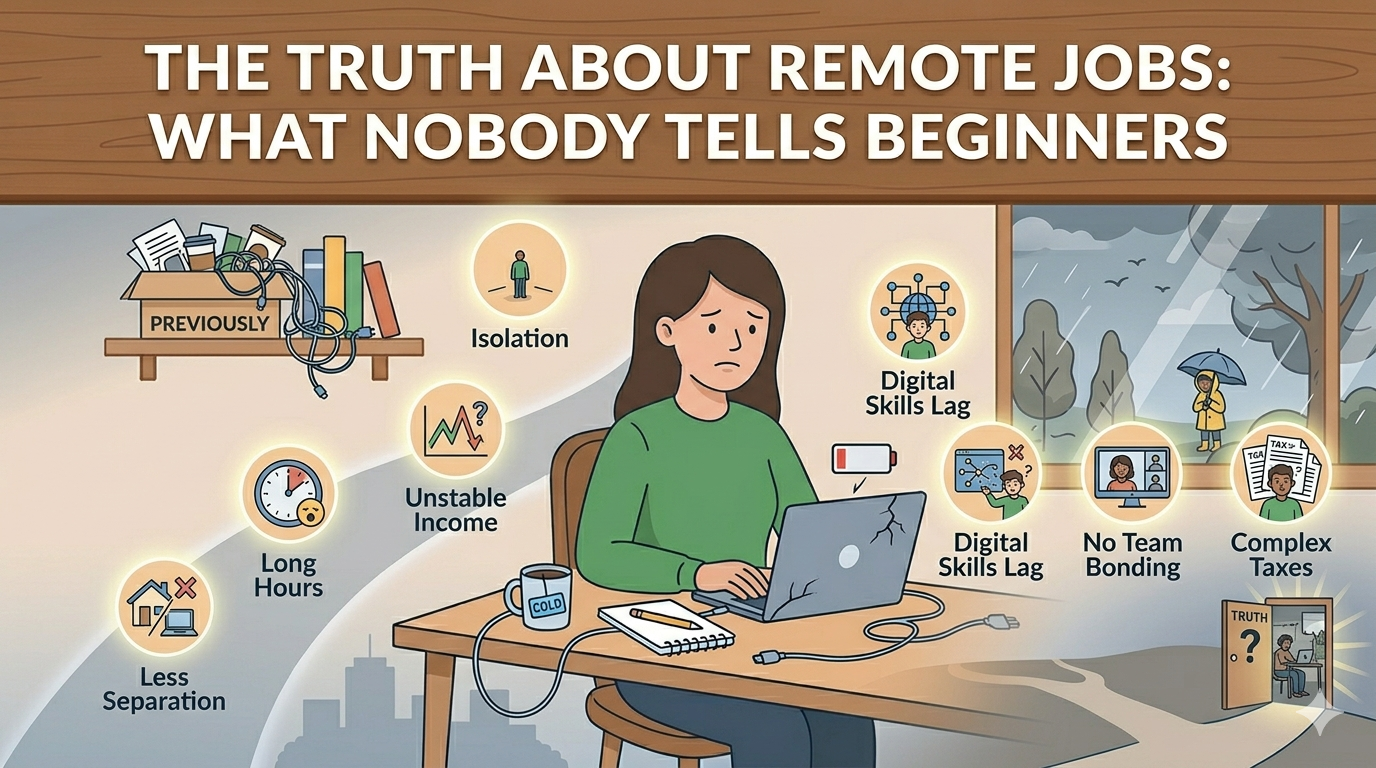
In 2026, the allure of remote work is stronger than ever. The promise of earning in foreign currency, avoiding the daily chaos of Nigerian traffic, and working in your pajamas is a powerful motivator. However, most social media “gurus” only show the highlight reel—the coffee shops, the laptop on a beach, and the flexible hours.
If you are looking to make a successful career out of this, you need to look past the aesthetic and understand the gritty reality of the industry. Before you dive in, let’s pull back the curtain on what it really takes to survive and thrive in a remote environment.
1. You Are Now Your Own IT Department
In a traditional office, if your laptop crashes or the internet goes down, you call the IT desk. In the remote world, you are the IT desk. Beginners often underestimate the mental and financial toll of maintaining a reliable home office. In Nigeria, this means managing dual ISPs and complex power backups. If you can’t troubleshoot your own connection issues, your reliability—and your job—are at risk.
2. The “Loneliness Factor” is Real
The biggest shock for many new remote workers is the silence. There are no “watercooler” chats, no physical lunch breaks with colleagues, and no non-verbal cues from your boss. For an extrovert, this can lead to a quick decline in mental health. You have to be intentional about creating a social life outside of work because your professional life will no longer provide it.
3. Work-Life Balance Can Actually Get Worse
People assume remote work gives you more free time. In reality, without a physical commute to “close” the day, work often bleeds into personal time. You might find yourself answering Slack messages at 9:00 PM or feeling guilty for taking a lunch break. Beginners often struggle with “Remote Work Guilt,” where they feel they must stay online longer just to prove they are actually working.
Internal Link: This is why learning the right mindset is vital; if you are moving from a physical desk, you should review our guide on How to Transition From Office Work to Remote Work Successfully to avoid these common burnout traps.
4. Over-Communication is the Only Way to Survive
In a remote setting, if you aren’t talking, you don’t exist. You cannot rely on “being seen” in the office to get credit for your hard work. You have to learn how to document your processes, provide regular updates, and be extremely clear in your writing. One misunderstood email can derail a week of work.
5. Your Performance is Measured by Output, Not Hours
In many Nigerian offices, staying late is seen as a sign of dedication. In the global remote market, nobody cares how long you sat at your desk. They only care if the task was completed correctly and on time. This shift from “time-spent” to “value-delivered” can be jarring for those used to traditional supervision.
6. The Global Competition is Fierce
When you apply for a remote job, you aren’t just competing with people in your city; you are competing with talent from India, Eastern Europe, the Philippines, and South America. You have to be “global-standard” from day one. This means your CV, your communication skills, and your technical proficiency must be top-tier to even get an interview.
7. Distractions are Your New Boss
When you work from home, everything is a potential distraction: the TV, the fridge, family members who think you are “free” because you are home, or even the urge to do chores. Beginners often find that their 8-hour workday stretches into 12 hours simply because they haven’t mastered the discipline to stay focused in a non-traditional environment.
8. The Financial Responsibility Shifts to You
While you might save money on transport, you will spend more on data, electricity, and hardware maintenance. Furthermore, as a remote worker (especially as a freelancer or independent contractor), you are responsible for your own taxes, health insurance, and pension. You must factor these “hidden costs” into your salary negotiations.
9. Learning Never Stops
In a physical office, you might get promoted based on seniority. Remotely, you stay relevant based on your skills. The tools used in 2026—AI-driven project management, virtual reality meeting spaces, and specialized software—evolve rapidly. If you stop learning for six months, your skill set might become obsolete.
10. The Freedom is Worth the Effort
Despite these “harsh truths,” the benefits are unparalleled. Once you survive the initial learning curve, you gain the ability to design your life around your work, rather than your work around your life. The key is to start with your eyes wide open.
Conclusion
Remote work isn’t a “get rich quick” scheme or an easy way out of hard work. It is a professional shift that demands high levels of discipline, technical savvy, and emotional intelligence. By acknowledging these truths early, you can build a sustainable, long-term career that offers the freedom you’ve been looking for.
Are you ready to stop being a beginner and start your journey?
Internal Link: If you’re worried about the challenges we’ve discussed, the best way to prepare is to learn How to Transition From Office Work to Remote Work Successfully so you have a solid plan before you quit your day job.