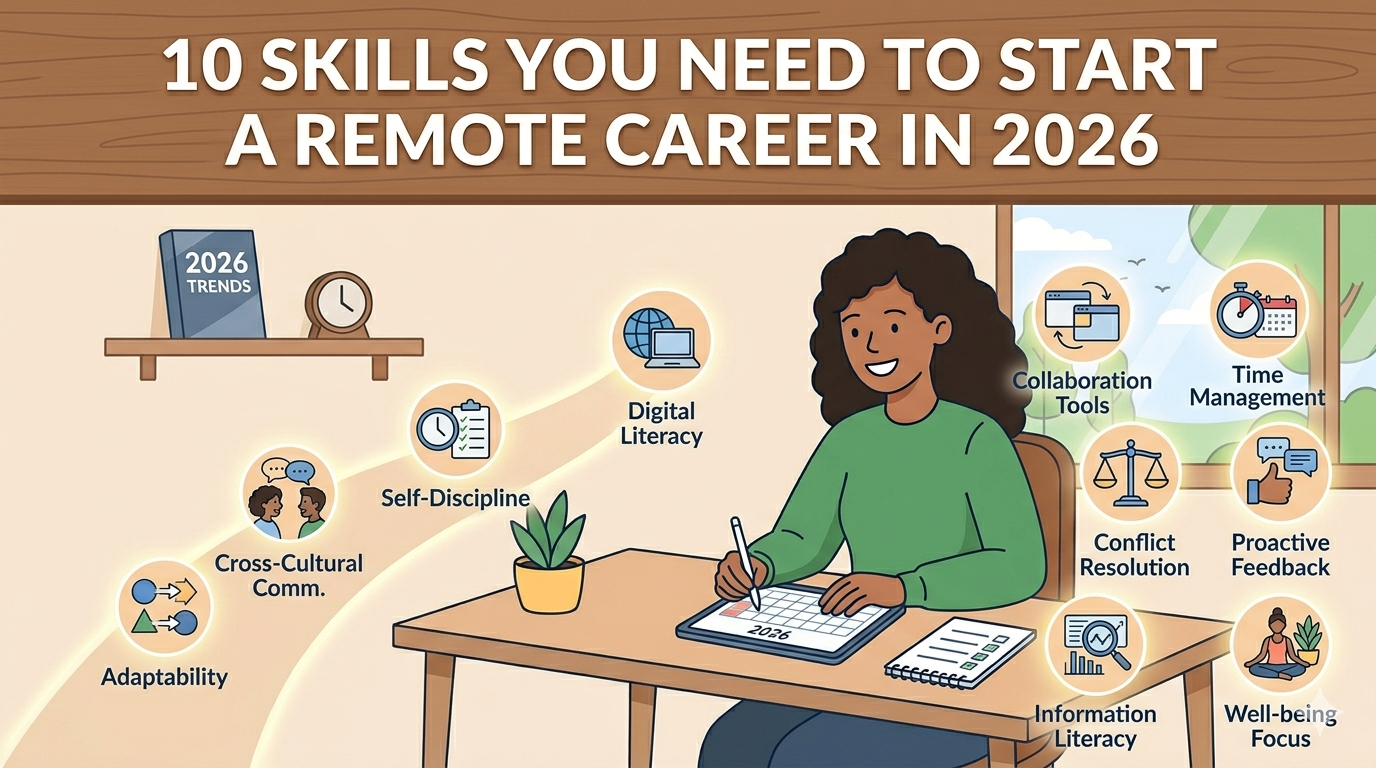
If you want to succeed in remote work, there is one thing you cannot ignore—skills. Not certificates, not connections, not luck. Skills.
Many beginners spend too much time worrying about experience or qualifications, but the truth is simple: once you have the right skills, opportunities start opening up naturally.
If you’ve been following this series step by step, you already have a strong foundation. You understand what remote jobs are and how they work:
👉 What Are Remote Jobs? A Beginner’s Guide for Nigerians
You’ve also learned how to begin even without experience:
👉 How to Start Working From Home With No Experience
And most importantly, you now know how to actually land your first remote job:
👉 The Complete Guide to Landing Your First Remote Job
Now, the next step is to focus on the exact skills that will help you get hired and grow.
Why Skills Matter More Than Ever
The remote job market is growing fast, but so is competition. Employers are no longer just looking for people who are available—they are looking for people who can deliver results.
The good news is that you don’t need to master everything. You only need to focus on a few high-impact skills that are useful across many roles.
Let’s break them down.
1. Communication Skills
This is the most important skill in remote work.
Since you won’t be working face-to-face, everything depends on how well you communicate through:
- Emails
- Chat messages
- Video calls
You must be able to:
- Write clearly
- Understand instructions
- Ask questions when confused
- Respond professionally
Strong communication builds trust, and trust leads to more opportunities.
2. Basic Computer Skills
You don’t need to be a tech expert, but you must be comfortable using a computer.
Essential basics include:
- Browsing the internet
- Sending emails
- Using Google Docs or Microsoft Word
- Uploading and downloading files
If you struggle with these, even simple remote jobs will be difficult.
3. Time Management
Remote work gives you freedom—but with that freedom comes responsibility.
You need to:
- Meet deadlines
- Manage your daily schedule
- Avoid distractions
- Stay consistent
Many people lose remote jobs not because they lack skills, but because they cannot manage their time properly.
4. Problem-Solving Ability
Employers value people who can think independently.
Instead of asking questions for every small issue, you should be able to:
- Analyze situations
- Find solutions
- Take initiative
This makes you more reliable and valuable.
5. Adaptability
Remote work is constantly evolving. New tools, systems, and workflows appear regularly.
You must be willing to:
- Learn new tools quickly
- Adjust to different work styles
- Stay updated
The more adaptable you are, the easier it becomes to grow.
6. Familiarity With Remote Tools
Most remote jobs rely on specific tools for communication and collaboration.
Common tools include:
- Email platforms (Gmail, Outlook)
- Messaging apps (Slack, Teams)
- Video tools (Zoom, Google Meet)
You don’t need deep knowledge, but basic familiarity gives you an advantage.
7. Writing Skills
Even if you are not a writer, you will still need to write.
This includes:
- Emails
- Reports
- Messages
Clear writing helps avoid misunderstandings and improves professionalism.
8. Organization Skills
Remote work involves handling multiple tasks and files.
You should be able to:
- Keep documents organized
- Track tasks
- Manage workflow
Being organized makes you more efficient and dependable.
9. Research Skills
Many remote roles require you to find and process information.
You should know how to:
- Search effectively online
- Identify reliable information
- Summarize what you find
This is especially useful for virtual assistants and content-related jobs.
10. A Marketable Skill (Your Income Skill)
All the skills above support your work, but you still need one core skill that earns you money.
This could be:
- Customer support
- Virtual assistance
- Data entry
- Content writing
- Social media management
If you’re still unsure which path to choose, revisit this beginner guide:
👉 How to Start Working From Home With No Experience
How to Start Learning These Skills
You don’t need expensive courses to begin.
Start with:
- Free tutorials on YouTube
- Practice tasks
- Real-world simulations
Focus on learning just enough to start applying. You can improve as you gain experience.
How These Skills Work Together
Think of these skills as a system:
- Communication helps you interact with clients
- Time management ensures you meet deadlines
- Organization keeps your work structured
- Your main skill generates income
When combined, they make you a strong remote worker.
Common Mistake to Avoid
Many beginners try to learn everything at once.
Instead:
- Pick one main skill
- Learn the basics
- Start applying
- Improve along the way
Progress comes from action, not overthinking.
How This Connects to Your Journey
At this point, you are no longer just learning—you are preparing to take action.
You now understand:
- What remote jobs are
- How to start without experience
- How to land your first job
- The skills required to succeed
The next step is to explore actual job opportunities you can start with immediately.
Next Step in Your Learning Journey
Now that you have the skills roadmap, it’s time to look at real opportunities that match your level.
👉 Next, read:
How to Transition From Office Work to Remote Work Successfully
Final Thoughts
Skills are the foundation of every successful remote career. You don’t need to be perfect—you just need to start with the right ones and improve over time.
If you stay consistent, keep learning, and apply what you know, your first remote job is not a matter of “if”—it’s a matter of “when.”
Keep going.